 Even during busy months, I try to absorb at least some new music. This May, I barely had time to keep up with obituaries, and will admit to getting all Righteous Brothers over the band possibilities in Rock and Roll Heaven. If they had ever played together, I’m convinced the combined talents of Doc Watson, Chuck Brown and Adam Yauch would have been…well, the most ill-conceived trio in the history of popular music, but don’t let that stop you from loving any of their music. Really, if any of you discover a deep bond among these three that doesn’t involve Doc Watson’s alleged involvement in the 1979 movie Disco Godfather, you’re trying too hard.
The first time I saw Doc Watson play live would have been pretty impressive for most guitarists, but I suspected something was missing. The second time I saw him, and sadly the last, was a solo show at a much smaller venue. I’d rank that one as the second or third-greatest showcase of guitar virtuosity I’ve ever witnessed (right after Andres Segovia, and in a virtual dead heat with Richard Thompson at the top of his game). Doc was meticulous as a flatpicker, storyteller, and singer. As a lifelong city guy, I got a great reminder that any sophistication and flair I could muster would likely seem backward in comparison to the pride of Deep Gap, North Carolina. Doc had a warmth and grace that made it easy to forget the skill it must have taken to pull off those dizzying runs on his guitar.
The range of material Doc liked to perform went well beyond the sort of old-timey traditional bluegrass that most probably associate with him. I think he cared much less about preserving “authenticity,” or defining his role in the musical world, than many of the folk music revivalists who helped bring his music to a worldwide audience. In an interesting biography of Doc Watson’s life and work, flatpicking scholar Dan Miller explains that in the early sixties, musicologist Ralph Rinzler had to persuade Doc to borrow an acoustic guitar for use in recording sessions, because Doc had been playing an electric model. Doc found inspiration in all kinds of places–old-timey or modern, black or white, city or country–using his fast fingers as a radar.
Doc’s only serious flatpicking competition may have come from his own son Merle, who broadened Doc’s range and deepened his love for the blues before his death in a 1985 tractor accident. Doc honored his son’s memory by starting the annual Merlefest. When he mentioned his son at the shows I saw, you could see the love and loss etched into the lines on his face.
Doc Watson, Blues Medley (“Deep River Blues,” “St.James Hospital,” “Nine Pound Hammer,” “Daniel Prayed,” “Mountain Dew”)
Doc Watson and Merle Watson, “Don’t Think Twice,” “Make Me a Pallet”






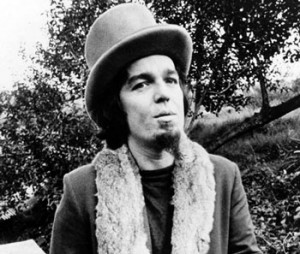 The good Cap’n